Strength training builds capability and resilience
Published by HealthFitness on June 1st, 2026
The way employees engage with workplace fitness, wellness and injury prevention is shifting, and clear patterns are emerging in what people expect from their workplace experience.
Several developments are now reshaping workplace wellbeing. Across all of them, one truth stands out: employees are not one homogeneous group, but a range of distinct personas—including Athletes, Everyday Exercisers, Health Seekers, Social Seekers, Hesitant Beginners and Skilled Laborers—each with unique motivations and needs.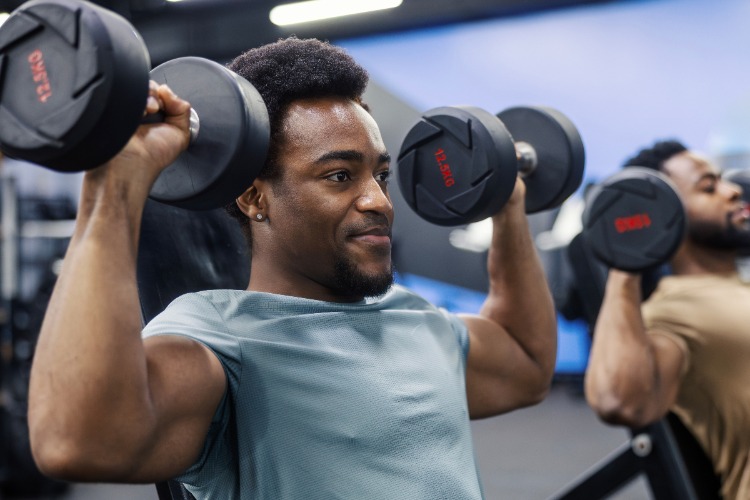
A key development we’re seeing across our sites is the growing emphasis on strength training as a core component of workplace fitness and wellbeing.
A growing focus on functional fitness
Across nearly every site type, from manufacturing floors to corporate campuses, traditional and functional strength training continues to rise in popularity. Employees are lifting independently, training in small groups and participating in performance-based formats that build measurable strength and resilience.
This isn’t just about aesthetics. It reflects a broader emphasis on physical capability, injury prevention, metabolic health and long-term function — especially in environments where physical demands are high.
In 2025, HealthFitness delivered 112,805 personal training sessions, with strength training cited as the number one reason employees hire a trainer. Group exercise participation also increased 34 percent, with Strength and Power, Core and Abs and Yoga among the most attended formats.
But what’s most telling is how employees are engaging.
Strength training with independent support
Younger demographics, in particular, are increasingly comfortable lifting independently. At many sites, coworkers coordinate workouts together, forming informal lifting communities within the facility.
Leading organizations support this by ensuring:
- Clearly structured strength zones with intuitive layouts
- Visible programming guidance (weekly plans, QR-based movement demos)
- Introductory Strength Foundations workshops for newer participants
This approach allows the Athlete and Everyday Exerciser to train with autonomy, while giving Hesitant Beginners and Health Seekers confidence that they’re using equipment safely and effectively.
Small group and functional progressive training
Beyond independent lifting, small-group strength sessions are gaining traction. These typically run as 4–8 week progressive programs led by certified professionals using the HealthFitness Movement Training System®.
Functional circuits are also popular, especially at sites where physical job demands are high and time is limited. Sessions often incorporate balance and stability work, core strength and strength training. This structure appeals across personas. Skilled Laborers value injury prevention and job performance benefits. Health Seekers appreciate guided, progressive instruction. Athletes enjoy measurable strength gains.
Fusion formats
Many sites are layering fusion formats like Barre Fusion and Mat Pilates Fusion. These programs blend strength, mobility, balance and control into a single approachable workout broadening access to employees who may not identify with traditional weightlifting.
This diversity of offerings matters. Not every employee wants to deadlift heavy. But many want to feel stronger, more capable and more resilient.
How companies should support this trend
- Provide well trained and credentialed professionals who provide coaching, programming and supervision — not just access to equipment.
- Design spaces that accommodate both independent lifters and structured small groups.
- Offer onboarding sessions to reduce intimidation for new participants.
- Educate members on the connection between strength, injury prevention, metabolic health and long-term function.
In physically demanding environments, some sites integrate strength programming with ergonomic education and safety initiatives, reinforcing that training supports job performance, not just fitness goals.
Why this matters
For HR and benefits leaders, this trend represents an opportunity to support resilience, reduce risk and help employees feel physically prepared for both work and life.
The organizations seeing the greatest impact aren’t simply adding more weight racks. They’re asking, “How do we build a stronger workforce?” That strategic framing and the intentional support behind it, is what turns strength training into a long-term health advantage for employees.
Learn more
This is one of seven major developments we’re seeing across our 400 sites and 1M+ participants that are shaping the future of workplace fitness and wellness.
To understand the full scope of these shifts across the workforce, download The State of Corporate Fitness and Wellness.
Explore all seven insights and how they can help organizations design more impactful wellbeing programs.
Download the full report here.
Share
Author

Written by HealthFitness
HealthFitness is a proven leader in providing fitness solutions that engage and connect people both on-site and online, to create a strong community of health.
Topics