Designing workplace fitness for real schedules
Published by HealthFitness on July 1st, 2026
Time remains one of the biggest barriers to participation in fitness and wellness. Across industries, employees consistently cite demanding workloads, packed calendars, shift schedules, and family and personal responsibilities as reasons they struggle to engage consistently.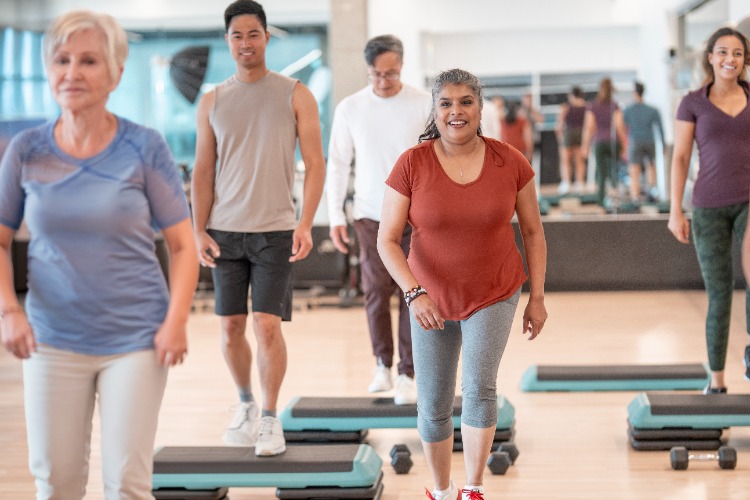
In response, 30-minute workouts, or less, are becoming increasingly popular. But this isn’t about cutting corners. It’s about delivering efficient, intentional programming that respects employees’ time while still producing results.
What This Looks Like in Practice
At leading sites, shorter workouts are thoughtfully designed rather than compressed versions of longer classes.
Many organizations are offering structured 20–30 minute circuit-based sessions that combine strength, mobility, and conditioning into efficient formats. These sessions are often built around timed intervals, supersets, or rotating stations so participants maximize effort without wasting time.
Drop-in friendly design is key, and sessions always start and end on time. For example:
- A 25-minute “Express Strength” session targeting one major movement pattern
- A 20-minute core and mobility reset between morning and afternoon meetings
- A 30-minute total-body circuit designed for shift change transitions
This approach works particularly well for:
- Everyday Exercisers looking to maintain their routine
- Health Seekers who want efficient, guided structure
- Hesitant Beginners who feel less intimidated by shorter sessions
- Even Athletes use express sessions strategically — adding focused accessory work or recovery sessions to complement their broader training
Flexible Scheduling and Shift Integration
Shorter formats also allow programming to align with operational realities. In manufacturing and health care environments, express sessions are often scheduled around shift changes so employees can participate before heading home or just before starting their shift.
In corporate settings, classes may run at unconventional times — mid-morning, early afternoon, or late afternoon — reflecting natural productivity rhythms rather than traditional lunch-only offerings.
When employees know they can complete a meaningful session in 20–30 minutes without disrupting their day, participation increases.
Why This Matters
Programming that respects employees’ time increases utilization and long-term adherence. Shorter, smarter formats make fitness accessible to employees who might otherwise opt out entirely.
The organizations seeing the strongest engagement aren’t asking, “How do we get employees to find more time?” They’re asking, “How do we design programming that fits the time they have?”
Learn more
This is just one of seven major developments we’re seeing across our 400 sites and 1M+ participants that are shaping the future of workplace fitness and wellness.
To explore the full picture — and understand how these shifts connect across different employee personas — download The State of Corporate Fitness and Wellness.
Discover all seven developments and what they mean for organizations looking to build more inclusive, effective, and engaging wellbeing strategies.
Get access to the full report.
Share
Author

Written by HealthFitness
HealthFitness is a proven leader in providing fitness solutions that engage and connect people both on-site and online, to create a strong community of health.
Topics