Building a multi-generational approach to corporate fitness
Published by HealthFitness on October 7th, 2026
Most employees want to feel healthier, stronger, and more energized. But the reasons they participate in fitness programs, and the types of experiences that motivate them, can vary based on life stage, health goals, physical ability, schedule, and personal preferences.
For employers, that creates an important question: How can you build a corporate fitness strategy that feels relevant to employees across generations without creating a separate program for every age group?
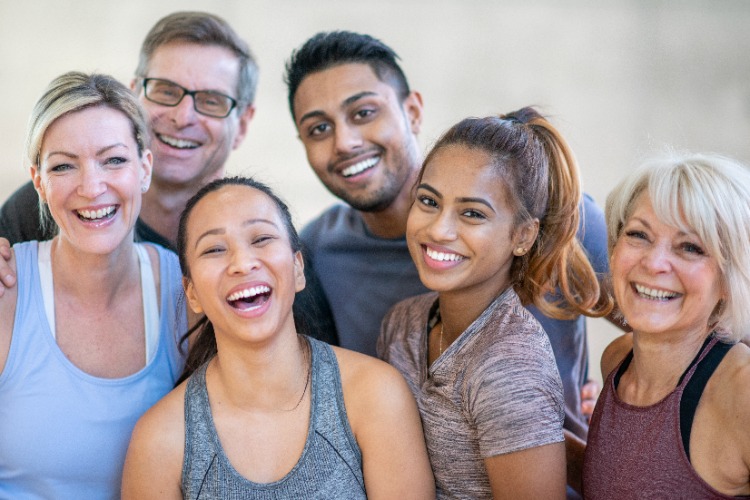
The answer isn't to design completely different programs for Gen Z, Millennials, Gen X, and Baby Boomers. It's to create a flexible, inclusive fitness strategy that recognizes differences in needs and motivations while giving everyone meaningful opportunities to participate.
And there's a clear business reason to get it right. Physical health remains a central part of employer well-being strategies. Business Group on Health's 2025 Employer Wellbeing Strategy Survey found that 99% of surveyed employers include physical health as a component of their overall wellbeing strategy. At the same time, 94% said they were increasing expectations of their wellbeing vendors to deliver outcomes.
In other words, corporate fitness isn't simply about offering more programs. It's about creating experiences employees will actually use and demonstrating their value.
Why a one-size-fits-all approach can fall short
A corporate fitness program can offer excellent resources and still struggle with participation if employees don't see how those resources fit their needs or their lives.Consider physical activity itself. According to the Centers for Disease Control and Prevention, 47% of U.S. adults met federal aerobic physical activity guidelines in 2024. But participation varied considerably by age: 54% of adults ages 18 to 34 met the guidelines, compared with 49% of adults ages 35 to 49, 44% of adults ages 50 to 64, and 38% of adults 65 and older.
Those numbers don't mean that every employee in a particular age group wants the same thing. They do illustrate an important point for employers: employees can enter a fitness program with very different starting points, abilities, and goals.
One employee may be looking to build foundational fitness. Another may want to improve strength and mobility. Someone else may be managing a health condition or looking for ways to stay active despite physical limitations.
A successful corporate fitness strategy needs to account for those differences without making employees feel categorized or excluded.
Build around goals, not generations
One of the simplest ways to create a more inclusive fitness program is to organize offerings around health and fitness goals rather than age.Strength training, for example, can serve a wide range of employees. Someone early in their career may want to build strength and establish healthy habits. A mid-career employee may be focused on maintaining fitness while balancing work and family responsibilities. An older employee may be interested in maintaining muscle mass, mobility, bone health, and independence.
The program doesn't need to be labeled for a particular generation. Instead, employers can communicate the benefits in ways that make the program relevant to different employees. The same principle applies to cardiovascular fitness, mobility, flexibility, endurance, weight management, and stress management.
Think goals first, generations second.
This approach also makes it easier to accommodate employees whose needs don't fit neatly into generational categories. Age is only one factor influencing how someone approaches fitness. Health status, physical ability, work schedule, previous exercise experience, and personal interests can be just as important.
Remove barriers to participation
Offering the right programs is only part of the equation. Employees also need a realistic opportunity to use them.Time is one of the biggest barriers. The International Foundation of Employee Benefit Plans' 2025 Workplace Wellness and Financial Education Survey found that the most common barrier to wellness initiatives among U.S. employers was workers' difficulty finding time to participate, cited by 33% of respondents. Cost was the second-most common barrier, at 32%.
That finding has important implications for corporate fitness. A program can be well-designed and highly relevant, but if employees can't fit it into their workday, commute, or personal responsibilities, participation will suffer.
Employers can address that challenge by creating multiple ways to engage, such as:
- Shorter fitness classes that fit into the workday
- Early-morning, lunchtime, and after-work options
- On-demand or virtual programming
- Walking and movement opportunities
- Self-directed workouts
- Programs available at multiple locations
- Fitness resources that employees can access outside traditional work hours
A multigenerational fitness strategy should therefore be part of a broader commitment to inclusive fitness, creating entry points for employees with different physical abilities, experience levels, and health needs.
Tailor the message, not necessarily the program
Personalization doesn't always require creating separate programs. Often, it means communicating the value of an existing program in different ways.
A strength program might be promoted as an opportunity to:
- Build foundational fitness
- Improve functional strength and mobility
- Support long-term bone and muscle health
- Complement other forms of exercise
- Connect with coworkers
The same principle can apply to incentives and communications. Some employees may respond to challenges and friendly competition. Others may be motivated by education, social connection, or measurable progress. The goal isn't to predict what an entire generation wants. It's to give employees multiple reasons and multiple ways to engage.
That distinction matters as employers increasingly look for evidence that their wellbeing investments are working. Business Group on Health found that 93% of surveyed employers planned to maintain or increase wellbeing investments in 2025, while 94% planned to increase expectations of wellbeing vendors to deliver outcomes.
Create opportunities for generations to connect
A multigenerational fitness strategy shouldn't only accommodate differences. It can also help employees discover what they have in common.
Group classes, walking and running clubs, recreational leagues, fitness challenges, and social events can create shared experiences across generations. That matters because the workplace itself is increasingly multigenerational.
The American Psychological Association's Work in America survey found that 92% of workers appreciated the opportunity to work with people of different ages, while 87% said having employees from a range of age groups was an advantage for their workplace. At the same time, some younger workers reported greater challenges connecting with colleagues from other age groups. Fitness can provide a natural setting for those connections.
Consider activities such as:
- 5K or charity fun runs
- Walking challenges
- Group strength or mobility classes
- Outdoor recreation
- Recreational leagues
- Fitness dance events featuring music from different decades
- Team-based fitness challenges
- Social events hosted around the fitness center
Make the fitness environment visibly inclusive
Employees form impressions about whether a program is "for people like me" before they ever participate. That makes the visual experience important.Images used in fitness centers, internal communications, websites, and promotional materials should reflect the diversity of the workforce. If every image features young, highly fit employees, for example, an older employee, or someone new to exercise, may not see the facility as a place where they belong.
Whenever possible, feature real employees and members who have agreed to participate in marketing efforts. Representation can communicate a simple but powerful message: This program is for you, too.
Inclusivity also means considering differences in ability, fitness experience, schedule, culture, and comfort level. Offering multiple ways to participate gives more employees a realistic entry point.
Make leadership support visible
Employees also take cues from leadership. If leaders talk about wellness but employees feel they aren't actually allowed to step away from their work to participate, the message is inconsistent.This is one reason corporate fitness needs to be integrated into workplace culture rather than treated as an add-on benefit. The opportunity is particularly important given the gap between how leaders and employees perceive workplace wellbeing.
Deloitte's 2025 Wellbeing at Work research found that around 75% of surveyed C-suite executives believed work had a positive impact on employees, while only about one in three workers said their job had a positive impact on their physical, mental, or social wellbeing.
That gap is a reminder that employers shouldn't assume that providing wellness resources automatically creates a culture of wellbeing.
Leadership can reinforce the message by:
- Participating in fitness and wellness activities
- Encouraging employees to use available resources
- Protecting time for participation
- Recognizing participation and progress
- Communicating that employee health is part of the organization's broader culture
Measure what matters
A multigenerational fitness strategy shouldn't be static. Workforces change. Employees move through different life stages. Health priorities evolve. New technologies create different ways to participate. And expectations for the workplace experience continue to change. That makes ongoing measurement essential.Employers should look beyond total enrollment and ask:
- Who is participating, and who isn't?
- Are participation rates different across locations, age groups, or work arrangements?
- Which programs attract employees across generations?
- Are certain populations underrepresented?
- Which communication channels drive engagement?
- Are employees using onsite, virtual, and digital resources?
- What barriers are employees reporting?
- What feedback are employees providing?
- Are participation and program outcomes aligned with organizational goals?
For employers, that means the question isn't simply "Do we have a fitness program?" It's "Is our fitness strategy reaching the people we want to reach, meeting employees where they are, and producing meaningful results?"
A fitness strategy designed for every generation
A multigenerational workforce doesn't require a separate fitness strategy for every generation. It requires a strategy that recognizes that employees have different goals, motivations, abilities, and circumstances, and gives each person meaningful ways to participate.The strongest approach combines personalization with inclusion: Design around goals, remove barriers to participation, create opportunities for connection, communicate benefits in relevant ways, and continuously measure and adapt the experience.
This approach also recognizes an important reality: employees don't stay in one life stage forever. Today's Gen X employee may have different priorities five or ten years from now. Today's young employee will eventually face different health, fitness, and work-life considerations. A successful corporate fitness strategy needs to evolve alongside the workforce it serves.
And that is where experienced fitness management can make a difference.
HealthFitness helps organizations create and manage fitness experiences designed around the needs of their workforce. Through expert-led programming, inclusive experiences, operational support, and data-informed strategy, HealthFitness can help organizations create fitness environments where employees across generations, and across different stages of their health and fitness journey, can participate, connect, and thrive.
Learn more
Ready to build a fitness strategy for the workforce you have today and the workforce you'll have tomorrow?- Connect with HealthFitness to explore a fitness and wellness solutions
- Podcast: Creating Community for Generationally Diverse and Dispersed Employees
- Blog: Building a Thriving Community of Health and Wellness
Share
Author

Written by HealthFitness
HealthFitness is a proven leader in providing fitness solutions that engage and connect people both on-site and online, to create a strong community of health.
Topics